
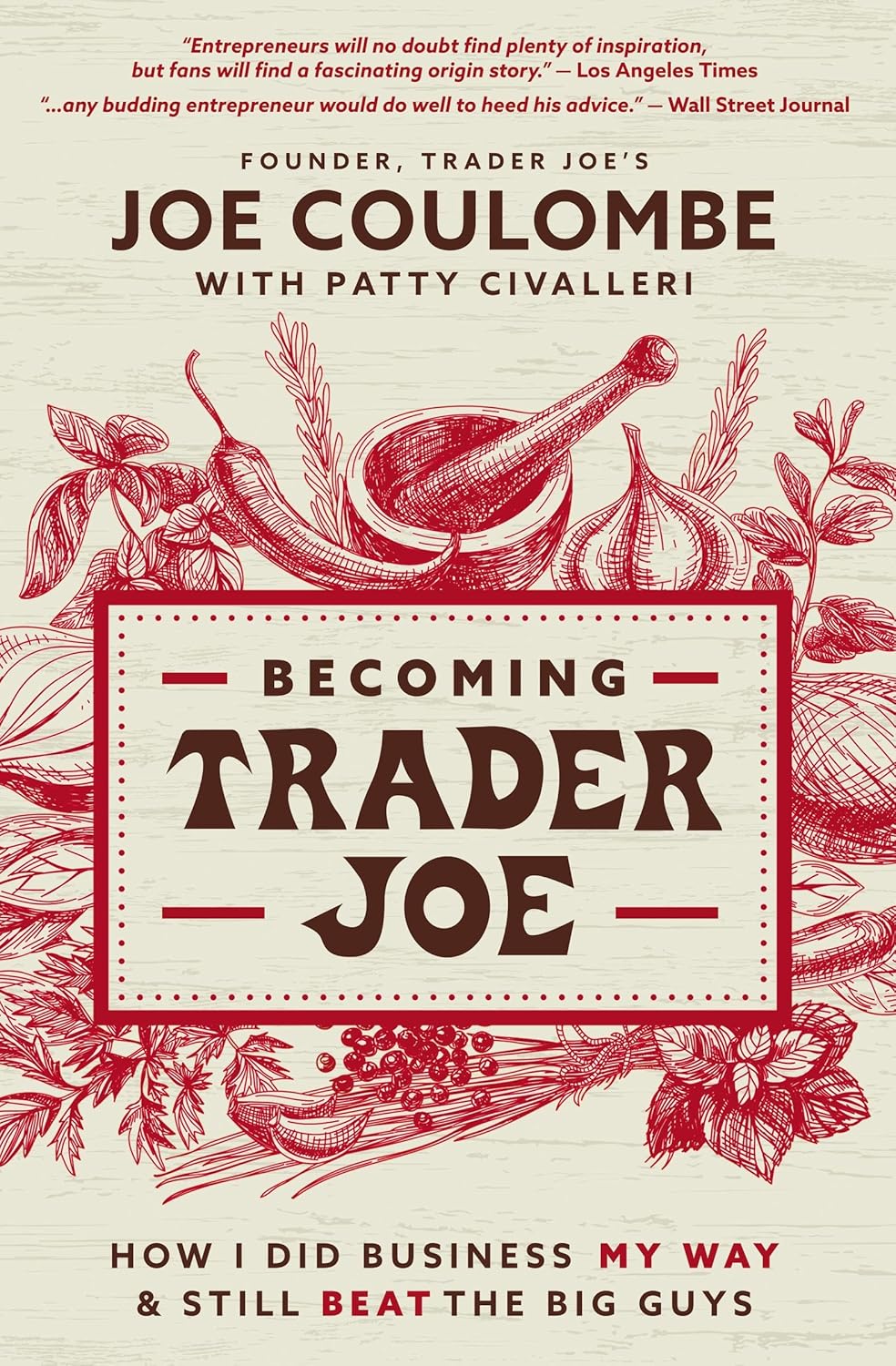
Why a grocery playbook matters for agencies
Agencies and discount grocers don't look like they share much DNA. One sells expertise and services. The other sells eggs and canned fish.
But the underlying problems are the same. Both face constant pressure to commoditize. Both must choose between being everything to everyone and being something specific to someone. Both live and die by the quality of their people and the trust of their customers.
ALDI and Trader Joe's solved these problems decades ago. The principles transfer directly: specialize deeply. Pay your people well. Decentralize into small autonomous units. Eliminate everything that isn't the core job. Make your clients so happy they never leave and they tell everyone they know.
What discount retail teaches agencies
Ten lessons drawn from both books, applied to running a service firm.
ALDI carries 600 products. Trader Joe's carries around 1,500. Both could carry more. Both choose not to. Fewer SKUs mean deeper expertise, better supplier relationships, faster decisions, and a clearer identity in the customer's mind.
For agencies, SKUs are services and verticals. Most agencies offer too many of both. The generalist agency that does "web, brand, SEO, paid, content, social, email, and video for anyone who'll pay" is the grocery store with 50,000 SKUs. It competes on nothing except availability.
The agencies that win pick a vertical (CPG, healthcare, fintech), a platform (Shopify, Webflow, Salesforce), or a service niche (performance creative, conversion optimization). Then they go deep. AI is accelerating this. As execution work gets compressed by tools, the only defensible position is knowing your client's business better than a generalist ever could.
The reason nobody copied Trader Joe's isn't the Hawaiian shirts. It's that nobody wants to pay grocery workers $34,000 in 1988 when the industry pays $22,000. Coulombe's math: good people pay for themselves through higher productivity. You can't afford cheap employees.
Agencies have the same economics. Labor is the dominant cost but also the dominant value driver. The instinct is to squeeze payroll. But turnover is the most expensive form of labor expense. Every senior person who leaves takes client relationships, institutional knowledge, and months of recruiting cost with them.
The move isn't just higher salaries. It's profit sharing, equity upside, and genuine ownership of outcomes. Incentive structures should reinforce the behaviors you want. When agency leaders have real skin in the game, they make decisions like owners, not employees.
Trader Joe's buyers visited factories. They tasted products. They understood supply chains. That knowledge became the advantage nobody could copy.
For agencies, this means knowing your client's industry as well as they do. Not just how to build a website, but understanding their margins, their seasonal patterns, their competitive dynamics, their customer behavior. The agency that can speak fluently about a client's business problems, not just their marketing problems, is the one that gets the strategy seat.
You can't develop this knowledge across fifteen industries. This is why specialization isn't just a positioning choice. It's a knowledge accumulation strategy.
ALDI doesn't pretend to be cheap. It is cheap. There's no show, no manipulation, no "perceived value" games. The price is honest because the cost structure is honest. Everything that doesn't serve the customer has been removed.
Agencies do the opposite. They sell hours, which creates an adversarial dynamic where the client wants fewer and the agency needs more. They discount first engagements hoping to make it up later. They pad proposals with time buffers instead of pricing the work directly.
The shift is toward fixed-fee and value-based pricing. Price the outcome, not the input. When you sell hours, you're a commodity. When you sell a defined result at a fixed price, you control the economics. No show. Just an honest offer for what the work is worth.
ALDI's "doing-without checklist" is monastic. No market research department. No external consultants. No customer surveys. Everything they could eliminate, they did. What remained was fast and cheap.
Most agencies operate at 40-50% gross margins and hope the volume makes up for it. The agencies that develop structural cost advantages, through offshore/nearshore talent, freelancer networks, AI-assisted workflows, reusable components, and lean engagement teams, can either pass savings to clients (winning more work) or keep margins while investing in sales and marketing.
Target 55%+ gross profit. That's the threshold where you have room to invest in growth without squeezing delivery quality. Below that, you're running on a treadmill.
ALDI spends 0.1% on advertising. Customers line up before the store opens. The product is the marketing.
For agencies, the math is similar. Most revenue comes from existing clients and referrals. Client retention is one of the strongest indicators of long-term growth. When clients stay, margins improve, referrals flow, and the pressure on new business eases. When they churn, no amount of pipeline activity makes up for it.
No amount of sales and marketing fixes bad delivery. Happy clients who come back and refer are the real engine. Investing in delivery quality, client communications, and proactive account management will always outperform investing in more lead gen.
Trader Joe's never price-matched. ALDI sets the market instead of reacting to it. Both have the confidence to lose a sale rather than compromise their economics.
Agencies discount constantly. They match another firm's bid. They offer free discovery. They throw in extra hours to close the deal. Every discount teaches the client to negotiate harder next time.
The better approach: know what your work is worth, price it there, and be willing to walk away. Over time, you build a client base that values the work itself. You stop competing with firms that buy business through discounting. And your margins fund the sales, marketing, and talent investments that make you better.
Coulombe gave every employee a six-month listening session. ALDI executives shopped their own stores anonymously. Both built systems to hear what the people closest to the work already knew.
In agencies, the designers, developers, and project managers executing client work every day see problems before leadership does. They feel the quality dip when a team is understaffed. They know which processes are theater. They hear the client frustration that never makes it into the status report.
Most agencies communicate top-down: leadership decides, then announces. The better model builds channels for the front line to surface problems early. Not suggestion boxes. Structured listening. The insight is almost always already inside the company. You just have to create the conditions for it to travel upward.
Coulombe's "dogs" were underperforming stores. He dumped them ruthlessly because the real cost wasn't the P&L loss. It was the management energy spent trying to save them instead of improving the good stores.
Agencies have the same problem with people, clients, and service lines. The underperforming team member you keep out of loyalty. The toxic client you endure because the revenue matters. The service offering that doesn't work but no one wants to kill.
Delayed decisions always cost more. The energy spent managing a bad situation is energy not spent on the opportunities that could actually grow the business. When you know something isn't working, act. The cost of waiting is never lower than the cost of deciding.
ALDI tests new products in three stores before rolling out. If it works, scale it. If it doesn't, you've wasted almost nothing. Coulombe landed in the same place: stop looking for the perfect answer. The factors are always changing.
Agencies love to plan. Strategy decks, roadmaps, alignment workshops. These have their place. But the best agencies also run small experiments quickly. New service idea? Test it with one client before building a team around it. New pricing model? Pilot it for a quarter. New vertical? Take two projects and see if the economics work before committing your positioning to it.
The cost of a failed experiment is almost always lower than the cost of waiting for certainty that never comes. Move fast on reversible decisions. Take your time only on the irreversible ones.